Load interface and mounting stack
The M3 version of the cited original drawing uses internal M3x0.5-6H interfaces. Check the actual part revision; do not add external studs to a comparison by assumption.
MT-ILC-SUB / REVISION-SPECIFIC COMPARISON
A micro-force replacement must preserve the small useful signal as well as the mounting envelope. Identify the original LSB200 item, thread revision, pretension and acquisition channel before proposing MT-ILC-SUB.
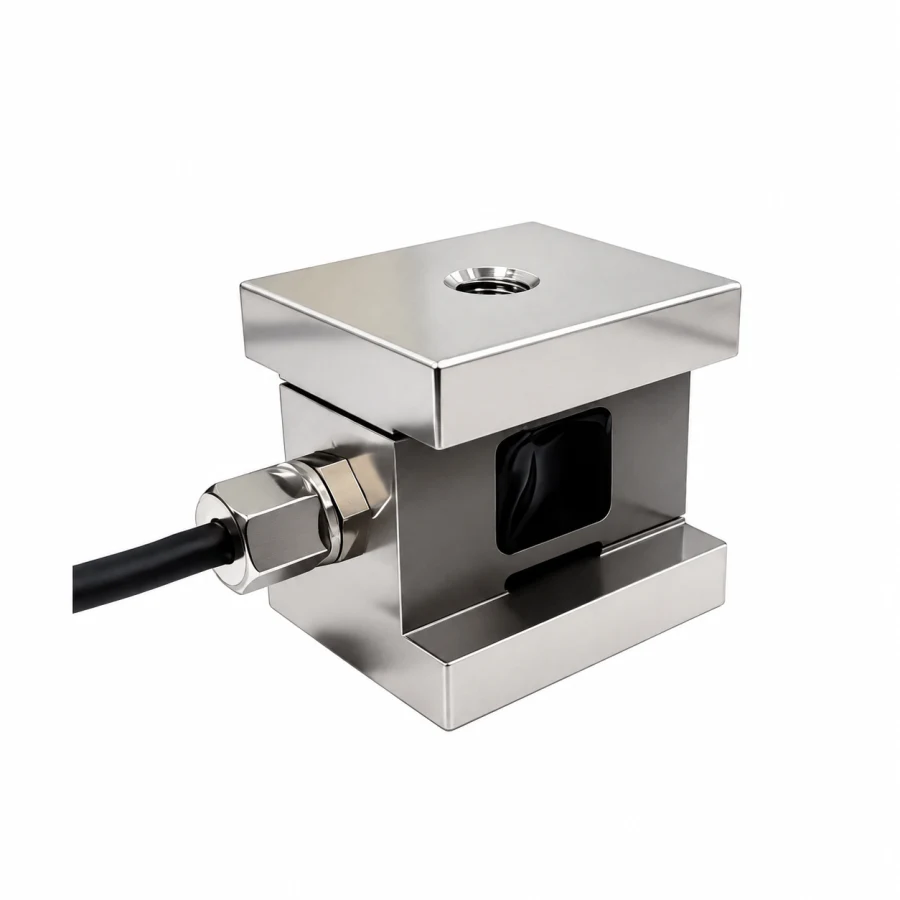
ORIGINAL MANUFACTURER REFERENCE
The dimensions and capacities below describe the cited original documents. The proposed MT-ILC drawing, electrical map and calibration scope are supplied for a separate approval.
| Original model / part | Original capacity & interface | Original envelope | Next engineering step |
|---|---|---|---|
| FUTEK LSB200LSB200 / FSH03870 | FSH03870: 1 NInternal threads; confirm metric/imperial revision | 19.05 × 6.7 × 17.5 mm reference formOriginal document ↗ | MT-ILC-SUB reviewCompare this original series →Request this comparison ↗ |
The M3 version of the cited original drawing uses internal M3x0.5-6H interfaces. Check the actual part revision; do not add external studs to a comparison by assumption.
Include the pretension and smallest useful force change. A sensor can survive an application while its noise or cable-induced force still obscures the intended measurement.
Specify assembly and impact loads separately from working force. Mechanical stops and their bidirectional rating must be verified for the proposed design; an original-brand rating does not transfer automatically.
BRIDGE / CONDITIONER / CONTROLLER
For robotic tendons, review eyelets, clevises, pulley clearances and independent 8/16-channel acquisition as a system. Define per-channel sampling, synchronization, filters and latency before selecting a board.
Review a paired conditioning kit →Original-brand prices and delivery dates change by item and configuration. Request a current quote; no universal saving or interchangeability percentage is assumed.
No. FSH03870 is a 1 N original reference; other items have different ranges, sensitivity and dynamic characteristics. Send the full part number.
An eyelet is a different attachment geometry. Review load-line position, joint freedom, available space and overload protection before accepting that change.
ENGINEERING RFQ / SAMPLE REQUEST
Include both thread ends, working and peak force, available space and the signal your controller expects.
Company and university email domains are preferred. Prototype and research inquiries are welcome.
inquiry@inlineloadcell.com ↗